
David A. Johnston
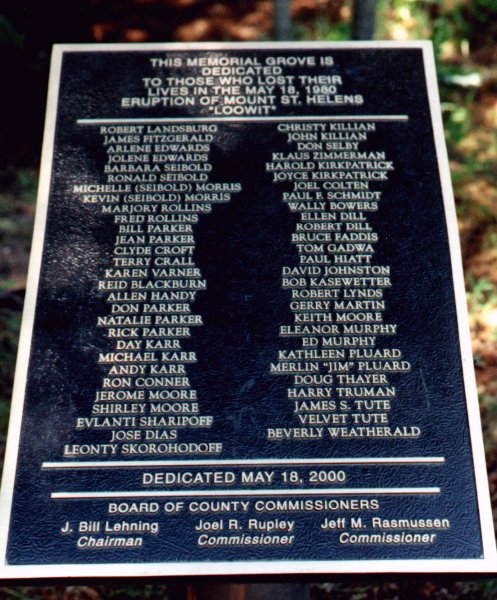 May 18, 1980 the world exploded.
Literally.
Living in Kelso, Washington as a nine-year old, the Sunday morning when Mt. St. Helens erupted remains one of the two events scarred into my young mind.
The other came when I was a freshman at Tumwater High School and the Challenger exploded in front of a national audience of schoolchildren as the first teacher and her brave crew-mates tried to break Earth’s hold and touch the bold beyond.
I remember ash raining down on Kelso for days. Wearing face masks when we went outside.
My dad — a window washer and carpet cleaner — getting a new lucrative side business of removing ash from roofs and gutters, and bag upon bag upon bag of the gray, glassy stuff piling up out behind his huge work shed.
I remember the Cowlitz River overflowing and being evacuated at 3 AM in the morning and going to a hotel and watching Humphrey Bogart in “The Treasure of the Sierra Madre” on the TV because no one could go back to sleep.
I remember that summer, when everyone went to the end of our road and hung out in front of the quickie mart, kids on beat-up bikes (with no helmets — we weren’t wusses back then), guzzling Mountain Dew all day as they brought huge pieces of equipment in, inch by inch, moving every telephone wire, to dredge the river and restore it to normal.
I remember flying over Mt. St. Helens weeks later, with my parents, on a sight-seeing flight and looking at total freakin’ destruction.
Later, when they started to let people back on to the mountain, a friend of the family, the kind of guy who always had 324 businesses going at the same time, bought a chunk of the trees which had been flattened by the explosion sight-unseen.
Too late, it turned out the trees were worthless and couldn’t be sold for fire wood, but not before me and my sister, Sarah, got to go with Shyster McShyster and his kids into a truly alien environment.
There was not a sound, not a single sound in that area. Everything was fused and glassy as far as you could see, with no life anywhere. But the overwhelming thing was the complete, and I mean complete, lack of sound.
I remember going back many years later with my sister, her husband Kirk and my oldest nephew, Ford, and seeing how life had come back, yet many of the scars remained.
One of the eeriest moments I have ever experienced is sitting in the observatory, watching the film about the eruption.
There is a moment when you hear David A. Johnston, the volcanologist who alerted the world to what was happening, scream five words into his microphone.
“Vancouver! Vancouver! This is it!!”
And then he was gone, one of 57 men and women to die that day.
Gone, but never forgotten.





























 Coupeville Sports