Feeds:
Posts
Comments

Archive for the ‘X’s & O’s with Noah Roehl’ Category

Red Pride

Red Pride

Coupeville Cows

Coupeville Cows

Son of a coach and younger brother of a legendary quarterback, Noah Roehl grew up on the football practice field at Coupeville High School, building forts out of blocking pads and surviving off of stray orange wedges.

He now runs football and basketball tournaments which honor his father’s legacy, and he stops by to update us on how they went in 2012.

The Tom Roehl Memorial Scholarship will be given out this year to a graduate from Coupeville High School who best exemplifies how athletics have impacted their community service and academic excellence.

This year the scholarship, under the umbrella of the Coupeville Foundation for Coupeville Public Schools, was able to host two events.

We organized the Tom Roehl Turkey Bowl, a flag football tournament, on November 24th with about 18 participants on three different teams. This was the sixth year of the event, but, after a two year hiatus it was restructured into a more wide open format to encourage more participants and a co-ed format.

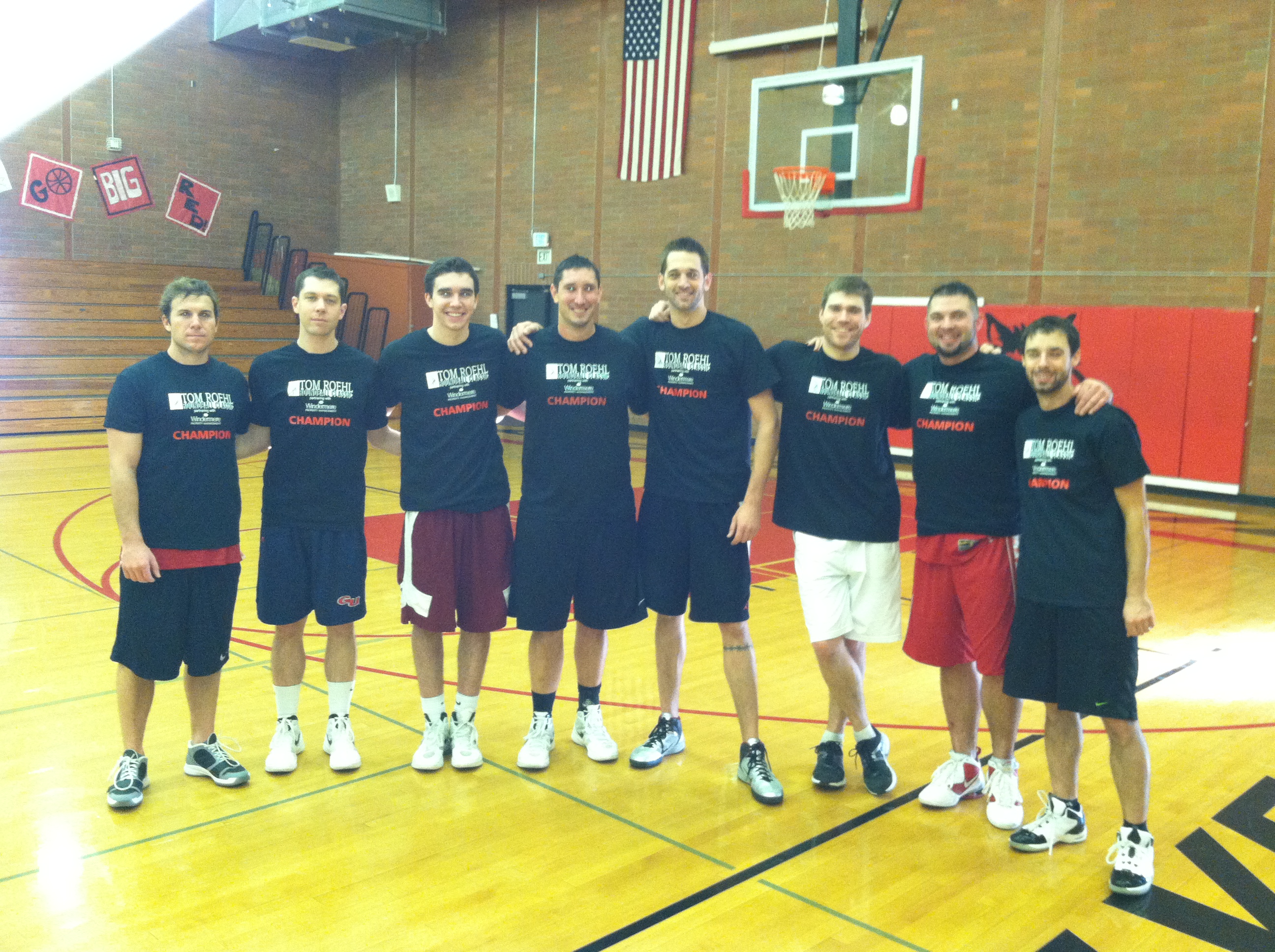
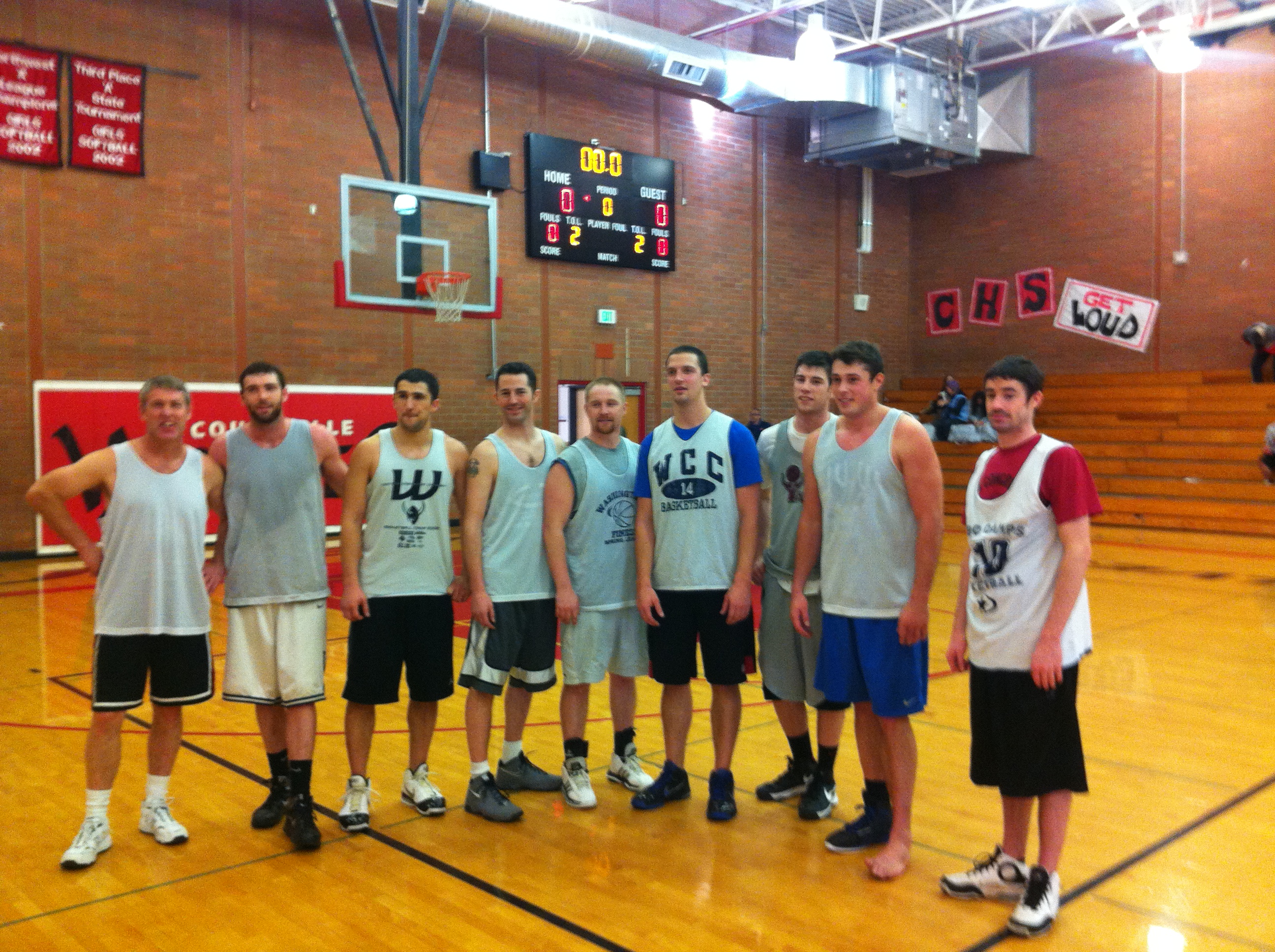
Additionally, we hosted the Tom Roehl Round-Ball Classic, an all-island basketball tournament. This was the third year of the tournament format, but the sixth year of the Round-Ball Classic.

We were able to raise $1,900 for the scholarship this year, which is the most we have raised.  We have some additional donations that typically come in this week from family and friends who live out of the area and that should bring us up to almost $3,000, which would also be the most we have raised in a single year thus far.

Both events were paired together this year and received significant support from local businesses. The event partner, which provided the necessary funding for all insurance and facility costs, was Windermere Property Management.

Our event sponsors, who help fund the t-shirts and officials fees were Schisel Construction, Harada Physical Therapy and Davido Consulting Group. Finally, our event supporters who helped cover any additional event costs were Ashley’s Design, R&R Tree Service, Sherman Farms, and Island Periodontics and Implants.

The 2012 Tom Roehl Turkey Bowl had about 18 participants on three teams. The teams played round-robin, with each team playing the other two, with a final championship game played at the end.

It was the first year of the 5×5/6×6 style and, while more teams would have been ideal, those that played had a ton of fun. We expect the event to grow over the next few years, similar to the way the Round-Ball Classic has grown.

We didn’t really crown a “Champion” this year as we combined some of the teams for the championship game, but the teams that participated were the Tecmo Super Bowl All-Stars, The Silver Bullets and Rocking Roehl.

The 2012 Tom Roehl Round-Ball Classic was a great success this year. We had six teams playing with a well represented team from South Whidbey and Oak Harbor — both those teams made it to the Semi-Finals.

The tournament started early in the morning and a few teams still had to clean the dust off their shoes from last years event.

With six teams playing, each team played three seeding round games, then based on record and points, were placed into a single elimination tournament.

The “Coupeville Cows”, #1 seed, and “Red Pride” #3 seed, were on opposite sides of the bracket setting up the possibility of a rematch of 2011’s championship game.

The “Oak Town Ballers” were the #4 seed and the “S Double U” were #2. After two play-in games against the “Roehl Machine” and “Two Old Guys and some Young’ins”, “Red Pride” and the “Oak Town Ballers” advanced to the semi-finals vs the “Coupeville Cows” and “S Double U”.

After two hard-fought battles in the semis, a rematch was set.

“Red Pride” won in 2011 after battling back and fourth and pulling away late in the game. This year “Red Pride” pulled ahead from the start of the game and, at one point, held a 14 point lead, but the “Coupeville Cows” climbed back into the game, chipping away at the lead over the final five minutes.

It looked like they might pull out a come from behind victory.

A few key stops and a three pointer from Brad Sherman put the Cows within two points with 10 seconds left. A foul put Michael Vaughn on the free throw line for 1 and 1. He missed the first one, but Nick Sellgren tipped the ball out of the key right back to Vaughn , who sank the follow-up shot.

The Cows tried to get a final shot off but it was too little too late. Red Pride made it two in a row!!

Read Full Post »

Let me tell you a story…

about this guy.

Son of a coach and younger brother of a legendary quarterback, Noah Roehl grew up on the football practice field at Coupeville High School, building forts out of blocking pads and surviving off of stray orange wedges.

Later, he would go on to be a star Wolf player himself, before transitioning into his current role as a high school assistant coach in Seattle. These are his thoughts:

This column will be a little different then my previous two. This time I am going to take the chance to help promote a couple events that support a great cause!

Over a 20+ year span, from about 1984-2002, if you graduated from Coupeville High School you probably knew who coach Tom Roehl was. He was that large guy, sometimes with a full beard, sometimes with a wicked mustache, who looked like he could eat all of the food the PTA had piled into the concession stand cupboards.

He would post up at basketball or volleyball games by the northwest gym doors, talking with Ron Bagby, Vinny Sellgren and Larrie Ford. Who knows what those conversations were like — oh, to be a fly on the wall.

Many Coupeville High School alumni might only remember him as being the father of one of the Roehl’s, while others got to experience him first hand. Coach Roehl organized, coordinated, and refereed the Central Whidbey Youth Athletic Association basketball league for twenty years, was a Cub Scout leader and a little league baseball coach.

But his service to the Coupeville and Whidbey Island community went beyond just sports. He also served on the school board, the math curriculum committee and volunteered as a History Day judge.  Frankly, it was probably hard to miss the guy, he was at A LOT of events and it was hard not to notice him.

While there are many great stories about coach Roehl over the years, the ones I remember most fondly are usually the ones where he transcends the title of coach and becomes more of a mentor.

For him, the lessons learned through sports and athletics were of equal importance as the lessons learned in the classroom. He also understood that the lessons learned on a Friday night could only truly be appreciated with a greater community perspective. To that end, coach Roehl was firmly dedicated to the academic achievements of athletes, as well as to the importance of involvement within one’s own community.

He had a special place in his heart for football and for football players.

His story is not one that many people probably know. He was an immigrant child, fleeing Germany with his mother post WWII. The two of them ended up in Philadelphia and his mother worked her tail off to support them both.

He was blessed with intelligence and hard work, and since he and his mother were both strong Catholics, he was given the chance to attend Joseph’s Prep School. While his education became a catalyst to open more doors down the road, football taught him how to work hard and tackle adversity. His studies were rigorous and his success on the football field wasn’t immediate.

His senior year he was able to win a catholic league championship as the center on the football team. He excelled with his education in the classroom and combined with the work ethic and teamwork in athletics, he was given the chance to attend college and expand his mind and beliefs even more.

Once he settled his family on Whidbey Island, it was his chance to give back.

It was an opportunity to give kids the perspective and guidance that he too got from others in his life growing up. However, he recognized that you couldn’t just preach, you had to give kids a chance to learn on their own, to fail, but more importantly, to be picked up so they could try again.

When the football team had suffered a hard loss on the road, he would wait a little longer before heading to the back of the bus to tell the seniors one of his slightly inappropriate jokes. He let the sting of the loss sit a little bit longer, but always picked the kids up so that they could continue to learn and grow.

This is what makes a place like Whidbey Island great and the Coupeville community special. While most kids can’t wait to get off “The Rock,” it is the learning opportunities in an environment that is supporting and nurturing that will help them succeed in their future endeavors.

The Tom Roehl Memorial Scholarship is only one of the many ways coach Roehl can continue to help students from Coupeville.

The fundraising efforts — the Tom Roehl Turkey Bowl and the Tom Roehl Round-ball Classic — not only raise money for a soon to be graduate who wants to “Get off the rock,” but it also gives the entire Whidbey Island community a chance to come together. We see faces and families that we might not see on a regular basis, and we all get a chance to celebrate values and opportunities that Whidbey Island and Coupeville High School has offered.

There are two events that are being organized this year to raise money for the scholarship.  If you cannot attend one of them but would like to donate, you can still do so on the CF for CPS website or by mailing a check directly to the foundation.

Donations can be made online at: http://4coupevilleschools.org/or by mail to: The Community Foundation for Coupeville Public Schools (CF for CPS), PO Box 1500, Coupeville, Washington 98239. Checks payable to CF for CPS — please note that it is for the Tom Roehl Scholarship.

Tom Roehl Turkey Bowl:

November 23
10am-3pm
5 vs. 5 (mens) and 6 vs. 6 (coed) flag football tournament
For additional details and registration information please visit www.tjroehl.org

Tom Roehl Round-Ball Classic :

December 22
9am-3pm
5 on 5 basketball tournament
For additional details and registration information, please visit www.tjroehl.org

Read Full Post »

The football doctor will see you now.

Son of a coach and younger brother of a legendary quarterback, Noah Roehl grew up on the football practice field at Coupeville High School, building forts out of blocking pads and surviving off of stray orange wedges.

Later, he would go on to be a star Wolf player himself, before transitioning into his current role as a high school assistant coach in Seattle. These are his thoughts:

In many sports, speed, the ability of an athlete to move from one spot to the next more quickly than their opponent, is a huge factor to success.[i]  Athletes at the professional level in almost all sports spend years, even decades trying to increase and maintain speed.

For this article I am defining speed as the time it takes a person to travel from point A to point B,[ii] whether that is by running straight ahead, moving laterally, tumbling on the ground or jumping through the air; the actual mechanics of moving are inconsequential.

The reason speed is so important in most sports, and specifically in football, is that it is very hard to coach.

As a coach you can get athletes to recognize a defense, exploit a weakness and run effective plays, but in the end, the athlete still has to be fast enough to make all of those pieces come together.

This unique situation is what Coupeville football Defensive Coordinator Dustin Vanvelkinburgh has found himself in.

Coupeville’s football team has a unique collection of speed.[iii]So how have Dustin and first year head coach Tony Maggio decided to harness this speed?Well, they looked around the NFL and college to see what other teams have done with a lot of speed and settled on a defense called the 4-2-5.

The 4-2-5 defense has its roots in the NFL, commonly (and often incorrectly[iv]) referred to as the nickel defense.But the true 4-2-5 is a hybrid of the 4-3 defense, which in turn was a hybrid of the 4-4.

I know most moms are wondering if we are still talking about football or math at this point, so here is how a defense breaks down.

The first number usually indicates the number of defensive linemen — those are the guys down in a three point stance on the line of scrimmage.The next number refers to the amount of linebackers on the field — these are the players standing right behind the defensive linemen.And finally, the last number typically refers to the number of defensive backs (fast guys) on the field — these are the guys relied upon to help cover the pass.

Each position is strategically placed on the field to stop different aspects of the offense.Defensive linemen and linebackers are primarily in place to stop running plays and some of the short pass plays while the defensive backs primarily cover pass plays and assist in tackles if a running back gets through the previous two layers of defense.Typically the defensive backs tend to be the faster positions on the field because the position is required to cover more space on the field than the other positions.

Now, the term “Nickel Defense” refers to the number of defensive backs a team has in the game; these are the positions designed to protect against the pass.

What is unique about the 4-2-5[v] vs other defenses that incorporate five defensive backs, is that the 4-2-5 relies on “hybrid”[vi][vii] players.These “hybrid” players posses some of the run stopping skills of a linebacker while also having the speed and ability to cover the pass, like a defensive back[viii], and are commonly referred to as strong safeties.

At the NFL and college level most teams have enough depth on their rosters that when a defensive coach wants an additional defensive back in the game they can sub the players and move in and out of a “Nickel” defense, basically going from four defensive backs to five.But as you move away from the NFL and away from some of the really big college programs[ix] you start to see teams and programs that don’t necessarily have the depth or type of players to sub in and out of “Nickle” coverage.

The creative solution that teams have started to utilize is to employ the “Nickle” coverage as the base defense, thus not requiring the coach to sub players when he thinks the offense is going to pass the ball.

The most striking program to employ this strategy is Texas Christian University.The Horned Frogs out of Texas have been a BCS buster the past eight seasons using a 4-2-5 defense[x][xi], very similar to what Coupeville has installed this season.

TCU has been running the 4-2-5 as an exclusive defensive package for the better part of the last nine years.Instead of subbing guys on passing downs, TCU just gets the fastest guys they can at those five spots and coaches them up so they can play every down.[xii]

These “hybrid” players are now on the field for almost every play, and instead of being limited by slower linebacker, TCU can use speed to attack the offense from different angles and different methods because they have a faster group of guys on the field.

While Coupeville isn’t yet knocking down the doors of Kings, ATM and Lakewood, the blueprint for success is being drawn.Coupeville’s defense has a lot of speed.They have an abundance of defensive backs and “hybrid” type players which has allowed Coupeville to take a few lessons from TCU.

Utilizing three safeties, two strong safeties and one free safety, coach Vanvelkinburgh can rotate between many looks and play a variety of coverages (man and zones).This ability is aided by Coupeville’s large and skilled defensive line, and has allowed Vanvelkinburgh to try to dictate what the offense will do by using blitzes from various places and positions to try to get to the quarterback, but also maintain coverage down field.

The Coupeville defense follows six simple rules:

1)      Swarm to the ball – 11 guys on defense all get to the ball carrier

2)      Punish the ball carriers and offensive players – stay physical and wear them down

3)      Stop the Run – Force teams to pass

4)      Don’t allow big plays – keep things in front of the defense and rally to the ball

5)      Create Turnovers – rip, strip and punch the ball loose

6)      Don’t flinch – give 100% effort at all times

With a lot of young fast players, like Jake Tumblin and Bryce Fleming, what Vanvelkinburgh and Maggio are going to need to do is harness that speed and unleash their defense on the rest of the Cascade Conference. 

——————————————
[i] I can only think of a few sports off the top of my head where foot speed is not a impacting factor — golf, synchronized swimming, wrestling, and crew.Although a compelling argument could be made that arm speed or overall quickness is a very impacting factor in those sports as well, lending to an argument that speed across the board is a huge factor in athletic success.

[ii] The technical definition of speed is rapidity in moving, going, traveling, proceeding or performing, swiftness, celerity.

[iii] You might hear a coach talk about “team” speed, what they mean is that across many of the positions on the team many players are faster than the coach would expect and their ability to “make” plays has collectively gone up.You hear this term in football, soccer and basketball a lot.

[iv] Technically speaking the “nickel” defense is a reference to the five defensive backs that are brought in to help cover the pass on a 3rd down situation.So a team could have a 5-1-5 or a 3-3-5, as long as there are five defensive backs on the field vs extra linebackers or defensive lineman.

[v] The 4-2-5 is Coupeville’s base defense this year and gets its roots from Texas Christian University (TCU).

[vi] Troy Polamalu with the Pittsburgh Steelers might be the best example of a strong safety who is utilized in a variety of ways due to his ability to play like a linebacker and cover like a defensive back.  See the section under “Pittsburgh Steelers” regarding his record of three sacks in a game by a safety.  http://en.wikipedia.org/wiki/Troy_Polamalu It is very uncommon to blitz a safety since they rarely posses the skills and body type to do this effectively.

[vii] This is one of my favorite articles on the concept of the “Nickle” defense and how a player like Polamalu allows coaches to blur the lines between playing to protect against the pass or playing to stop the run.  http://bleacherreport.com/articles/1335132-pittsburgh-steelers-what-exactly-do-the-steelers-lose-without-troy-polamalu

[viii] This is a really interesting article complete with videos of University of South Carolina running the 4-2-5 and how they utilize “Hyrbid” players (They call the position Spur) http://www.operationsports.com/ncaa/utopia/topic/78793-the-many-advantages-of-the-4-2-5-defense/

[ix] Alabama, LSU and USC all run variations of the nickel defense and sub in players to fill the 5th defensive back position on passing downs (see Troy Polamalu from above)  but recently there have been some other larger football programs that are starting to adopt this defensive scheme, see University of South Carolina above.

[x] The most recent program to achieve national acclaim by using the 4-2-5 is TCU.  Here is a link to an article presented by Gary Patterson at a Nike Coach of The Year Clinic, not sure which year but I have seen similar articles in American Football Monthly regarding this defense.  http://www.scribd.com/doc/33715491

/TCU425NikeCOY?secret_password=3ist6iqz567aw0tmvhc

[xi] Additionally, here is a secondary article on why the 4-2-5 has been successful at TCU.  http://brophyfootball.blogspot.com/2009/07/tcus-42-nickel-coverage-front.html

[xii] Here are a couple of other interesting blogs, one with a 3hr video of TCU’s head coach discussing the defense…probably way more than most people care to know about the 4-2-5.  http://brophyfootball.blogspot.com/2011/09/tcu-defense-explained.html  AND for those of you who really want to dive into learning about the 4-2-5 here is another video… http://coachhoover.blogspot.com/2012/07/4-2-5-defense-defense-of-future-david.html

Read Full Post »

Noah Roehl

Son of a coach and younger brother of a legendary quarterback, Noah Roehl grew up on the football practice field at Coupeville High School, building forts out of blocking pads and surviving off of stray orange wedges.

Later, he would go on to be a star Wolf player himself, before transitioning into his current role as a high school assistant coach in Seattle. These are his thoughts and the first in a series of columns on the sport(s) he loves:

What does the new football season at Coupeville look like?  A lot of confusion!

What I mean is that the offensive system that new head coach Tony Maggio is installing is based on deception, misdirection and general confusion for the defense. The Coupeville football team will be running the Wing-T offense.

This is not a new offense by any means. Developed by Glenn “Pop” Warner in about 1907[i], it uses a variety of play series in which the quarterback gives the ball to one running back, but fakes it to the other running backs.

The Wing-T offense is based on different series of plays. For instance, on any given play, the movements of the running backs and the quarterback might all look exactly the same, but the quarterback will hand the ball off to a different runner.

Typically there are about 3-4 plays per series, and depending on the football team and coaching staff, a team may have 3-4 play series in. While that might only give a team about 16 different plays, 4 series x 4 plays each, at the high school level, with VERY good execution, that can lead to a very good offense.

Most notably, Bellevue High School runs the Wing-T, and one could say it has had some success for them, having won 9 of the last 10 Washington State 3A championships.  While that is impressive, and definitely cements Bellevue’s legacy, I personally think the victory over De La Salle High School of California in 2004 has had a bigger impact.

At the time, De La Salle was riding a 151 game win streak[ii], and produced a ton of Division 1, and future NFL players.[iii]  Bellevue’s win gave modern validity to the Wing-T, and likely started the cascade of great athletes that would start filling Bellevue’s halls.

While most people believe that Bellevue is good because they have the best athletes, the reality is that the first 3 state championships and the win over De La Salle had less to do with the athletes[iv] and more to do with the system.

The Wing-T system is based on misdirection, but what many people do not realize is that the real value of the Wing-T system is that it puts the O-line at a huge advantage[v].

At the NFL and college level, most offensive and defensive lineman are massive.Not massive like your friend who can eat a lot of tacos, but massive like Bigfoot’s 350 pound child.

However, at the high school level, many teams play with offensive lineman who are small, scrappy and mean. They are willing to push people around, get a little dirty and execute when they know they will get little, if any, recognition for it (think Brad Pitt in “Snatch”).

When you are undersized as an O-Lineman it is often difficult to just line up across from somebody and push them any direction you want, which is the NFL and college concepts.

What the Wing-T does is creates angle blocks for the O-line. The O-lineman gets to take on a defender at an angle, with a slight element of surprise and the physical advantage of using the opposing players own momentum to the offense’s advantage. Additionally, these concepts allow lineman to pull, often referred to as a trap pull or a loop pull. Now that smaller undersized lineman, who is mean and gritty, and typically quick, can get out in front of the running back and essentially be an additional lead blocker.

As a defender playing a good Wing-T team, each play will potentially look like 3 other plays (remember the concept of the play series explained earlier), but the offense will also have an additional blocker out in front and because of the advantage of angles, the O-line will have created bigger seams for the running back to run through.

Going back to Bellevue’s defeat of De La Salle, it is my opinion that Bellevue was able to do more with less.

They executed extremely well and used the blocking schemes of the Wing-T to move much larger and stronger defensive players and create huge holes for the running backs to run through. Bellevue, largely believed to be the underdog in that night’s game, [vi], was able to soundly beat a much stronger opponent with scarcely more than a superior understanding of how to create  a lot of confusion.

Now how does this apply to Coupeville? Am I saying that Coupeville will win 9 state championships in the next 10 years? Maybe, but more realistically Coupeville’s football team will be able to take advantage of the same confusion that many defenses deal with when playing Bellevue.

The reason the Wing-T offense works is that smaller, undersized teams are able to compete by forcing the defense to defend against multiple plays and players on every play. Coupeville has a large and veteran O-Line and some very skilled and quick running backs. With a disciplined QB who can execute great fakes Coupeville will surprise many teams this year and put a lot of points on the score board.

——————————-
i – There are some that argue that Walter Camp developed the T-formation in 1882, which was the precursor for Pop Warner’s development, but the root of the Wing-T is actually based out of the single wing offense, often known today as the wildcat, or wild(insert name of your mascot). What is old is new again.

ii -151 game win streak would mean that De La Salle had not lost in almost 12 years. Assume 10 regular season games per year, plus 3-4 games for playoffs.The state of California does not have one state champion, like WA.  Instead they have regional champions, North, Valley, South, etc.  http://sports.espn.go.com/sports/news/story?id=1875067

iv – I am not saying that Bellevue didn’t have great athletes, but as a whole Bellevue athletes have not gone on to  achieve the athletic careers that some of the De La Salle alum did. Bellevue’s two most notable football players to go onto the NFL are Stephen Shilling and David DeCastro, both of who were intelligently gifted and both spent spent 4 years at highly ranked Universities — The University of Michigan and Stanford University respectfully — before going onto the NFL.

v – Notice that Bellevue’s most notable NFL players are both offensive lineman.

vi – Hard to believe the Bellevue was an underdog considering they had won the last 3 state titles, but they were largely considered underdogs in that game.

Read Full Post »