Feeds:
Posts
Comments

Archive for the ‘Everything changes’ Category

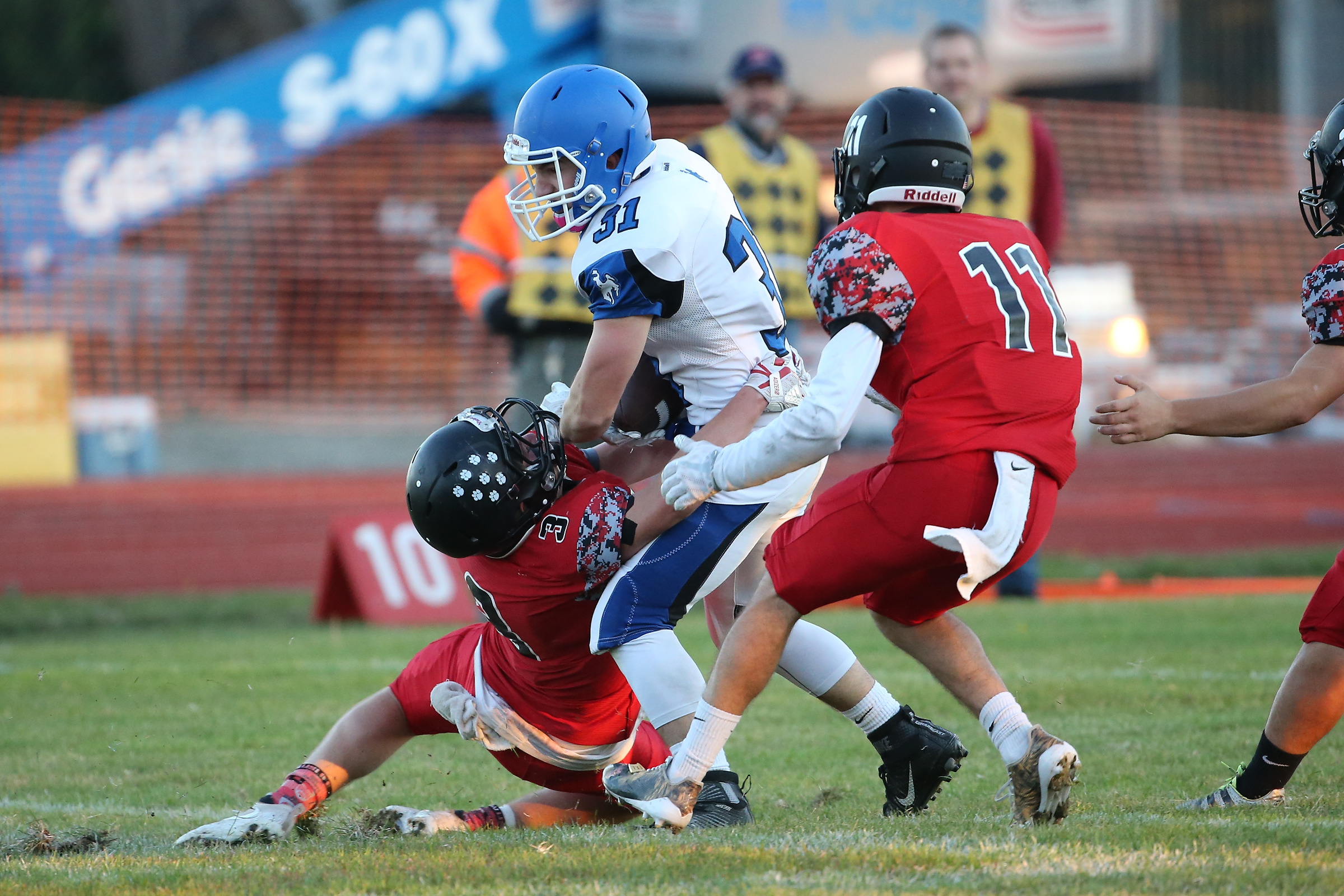
If games are played this school year, Coupeville and Chimacum will not meet on the gridiron as originally planned. (Photo by JohnsPhotos.net)

One less rival.

If games are played this school year, Chimacum will not join Coupeville in the Northwest 2B/1B League.

Instead, the Cowboys plan to unite with next-door neighbor Port Townsend, and the two schools will remain in the 1A/2A Olympic League, perhaps playing as “East Jefferson County.”

That’s according to a report Friday by The Peninsula Daily News.

When the Washington Interscholastic Activities Association conducted reclassification counts, Chimacum, like Coupeville, dropped from 1A to 2B.

The two schools were approved to join fellow 2B schools La Conner and Friday Harbor in the NWL, a league which also includes 1B schools Orcas Island, Mount Vernon Christian, Darrington, and Concrete.

Port Townsend was to join the 1A Nisqually League

But then COVID-19 threw everything all higgedly-piggedly.

Washington state schools haven’t competed in nearly a year thanks to the pandemic, and both the Chimacum and Port Townsend school districts have seen reduced enrollments.

The WIAA is currently proposing a plan in which fall sports would be played first, followed by spring sports, before winter sports cap the 2020-2021 school year.

The athletic governing body is allowing leagues to break free of that plan, however, and the NWL has applied to play spring-fall-winter.

Port Townsend and Chimacum, which already unite to field cooperative teams for cross country, girls swim, tennis, and wrestling, will add football and volleyball to that list.

They had already planned to also unite for girls soccer, and have been trying to resurrect a combined softball program.

Even with two schools, “East Jefferson County” sits at just 437 students, according to Port Townsend Athletic Director Patrick Gaffney.

That number keeps the combined program under the 1A cutoff, and it would actually have less students than Klahowya, the only other 1A school left in the Olympic League.

That conference, where Coupeville played from 2014-2018, includes seven 2A schools, headlined by North Kitsap and Sequim.

Post-pandemic, there are many options available.

Port Townsend and Chimacum could further unite, combining programs for all sports.

They could stay as is, with both schools having their own programs for sports such as basketball, boys soccer, golf, and track.

Or they could totally split apart, likely bringing Chimacum back to the NWL.

Like everything else in the Age of Coronavirus, nobody knows nothing for sure right now.

“If the two schools want to provide a broad range of sports, this might be the direction we have to look at,” Gaffney was quoted in the Daily News.

“If we don’t go that direction and Chimacum is a 2B and PT is 1A, you may have to cut sports offerings, and I think both communities don’t want to see that.

“To be able to offer swimming and tennis and other sports that some small schools don’t provide is good for our athletes.”

Like all AD’s in a frustrating time, Gaffney and Chimacum’s Carrie Beebe will try to balance what’s best for all involved.

“At some point this year, we will have an idea of how it is going, any issues that arise or don’t arise, and I think those will be minimal,” Gaffney said in the Daily News article.

“We are all trying to do what’s best for kids, PT and Chimacum, and when you frame it that way, it’s hard to come up with an argument against doing this.”


For the complete Daily News article, pop over to:

PREP SPORTS: Jefferson County high school rivals set for merger | Peninsula Daily News
Read Full Post »

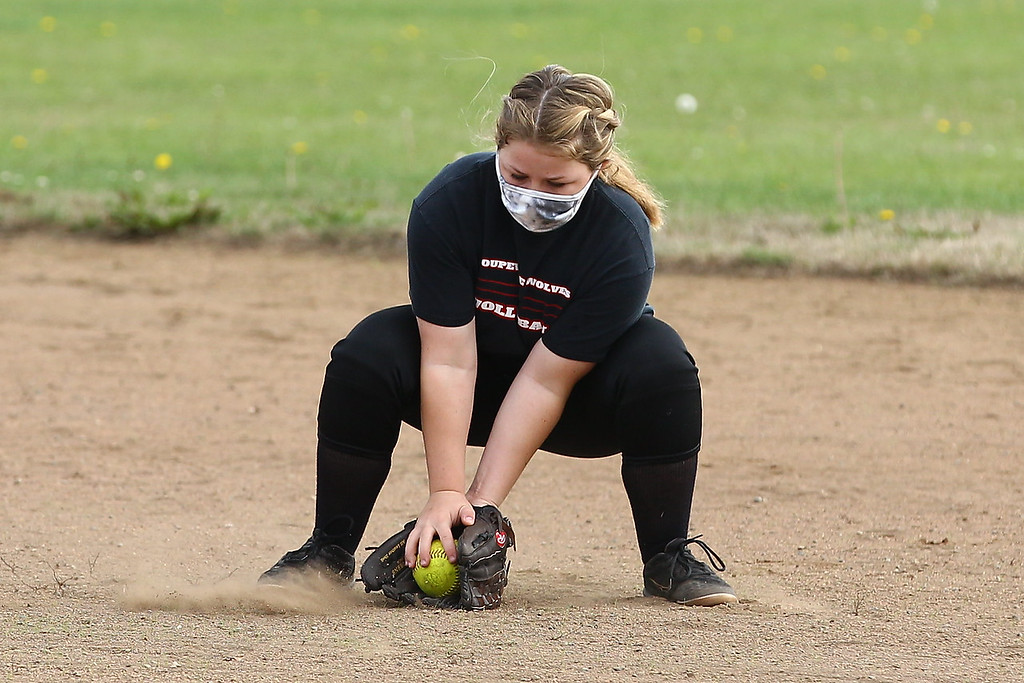
Heidi Meyers sports a mask while working on her softball skills. (Photo by JohnsPhotos.net)

It’s mandatory.

The Washington State Department of Health currently plans to require prep athletes wear masks in both practices and competitions through the remainder of the 2020-2021 school year.

The only sport that will be allowed to go mask-less is swimming.

There are ongoing discussions, however, concerning whether “low-risk” sports such as cross country and tennis might be freed from the mandate.

“We are continuing to share information on whether that (wearing masks) is appropriate in all venues,” said Washington Interscholastic Activities Association Executive Director Mick Hoffman.

“Right now we are being told we have to wear masks or we can’t do the activity,” he added. “That decision is made by the Department of Health, at the state level, and the Governor’s office.

“We (the WIAA) can not change that.”

Michigan, Minnesota, North Carolina, Pennsylvania, and Wisconsin have required masks for some prep sports, with Michigan the only one to have a face-covering mandate for high school football.

That mandate was issued by Governor Gretchen Witmer in September, and Michigan was able to play a complete season, with state championships set for this coming weekend.

In Washington state, athletes in all sports other than swimming will be “required to wear a cloth mask over mouth and nose at all times.”

Gaiters are “allowed, but not preferred.”

The DOH recommends masks made from cotton, fleece or linen, with a fastening mechanism, preferably ties or an elastic strap which goes around an athlete’s head or behind their ears.

Along with solitary “low-risk” sports perhaps being exempted, there is also the question on how football players will wear both a mask and the still-required mouth guard, since most mouth guards are directly attached to the player’s helmet.

Like everything in the Age of Coronavirus, things can, and likely will, change from day to day as discussions between the WIAA and the DOH continue.

For now, the WIAA understands “there are conflicting medical reports out there,” Hoffman said.

But the athletic governing body can’t go counter to the mandates of state officials.

“For those that take the stance that this is a health concern for students doing it (wearing masks), and it can cause issues, all I can tell you, is if you feel that way, you can’t let the student participate,” Hoffman said.

“If it’s a bona fide health concern for that student, you shouldn’t put that student out there.

“No different from a head injury, or any cardiac issue; no different if they have serious asthma or smoke.

“Because, at this time, we can’t give you a waiver.”

Read Full Post »

Coupeville’s Willie Smith and fellow Northwest League Athletic Directors have a plan to return their athletes to play. (Photo by JohnsPhotos.net)

This is the way.

It’s not everyone’s way, but it will be our way.

Coupeville High School, and its rivals in the Northwest 2B/1B League are breaking free from Washington Interscholastic Activities Association guidelines, and have set their own path for returning to playing sports contests.

As everyone deals with the fallout of the ongoing COVID-19 pandemic, the WIAA is allowing individual leagues far-greater flexibility to make their own schedules.

With that in mind, NWL Athletic Directors approved a plan in which their athletes will play traditional spring sports first, followed by fall sports, before closing the 2020-2021 school year with winter sports.

The plan has been submitted to the WIAA for approval.

Actually playing games will depend on whether counties reach new metrics set by Governor Jay Inslee and the state health department, however.

Their plan — Healthy Washington – Roadmap to Recovery — divides the state into eight regions.

The North region includes Island, Whatcom, Skagit, and San Juan Counties.

NWL mates Coupeville, La Conner, Concrete, Mount Vernon Christian, Orcas Island, and Friday Harbor sit in that region.

Chimacum (Jefferson County) and Darrington (Snohomish County) are in the Northwest and Puget Sound regions, respectively.

All regions started in Phase 1 of the plan this week. Once a region moves to Phase 2, schools can begin playing games.

To reach Phase 2, a region must meet four metrics:

**10-percent decline in COVID-19 case rates over the past two weeks.
**10-percent decrease in COVID-19 hospital admission over the past two weeks.
**ICU occupancy under 90 percent.
**Test positivity less than 10 percent.

The NWL return to play plan calls for three six-week seasons, with some overlap.

Athletes will begin practice for the next season during the last week of the prior season.

“Think of it as if all of our teams that are playing would be in a state tournament and the next sport is getting ready for their season,” said Coupeville Athletic Director Willie Smith. “That is the goal, isn’t it?

“So our coaches will be working together to formulate a practice plan/requirements for those student-athletes that are playing multiple sports.”


Spring sports:

Baseball, softball, girls tennis, and track and field, running from February 22 to April 3.

“This fits better in current phases of all counties/regions, and is only one week earlier than normal spring sports start dates,” Smith said.

Starting with spring sports has multiple benefits.

All sports are played outside, which lowers risk of transmission, and spring athletes would be rewarded, as they were the ones who lost an entire season when state schools were initially closed in March, 2020.


Fall sports:

Volleyball, football, cross country, boys tennis, and girls and boys soccer run from March 29 to May 8.

Previously, when Coupeville was in the 1A division, soccer was played in separate seasons, but that changes with the Wolves now in 2B.

Pushing fall sports into the middle allows for a greater chance schools will be eligible to play football (a “high-risk” sport) and volleyball (an indoor one).


 

Winter sports:

While most of the NWL schools wrestle, Coupeville does not, opting for girls and boys basketball.

Hoops, being played indoors, currently sits at the very top of the “high-risk” chart for prep athletics in Washington state.

Having extra time for case numbers to recede as flu season fades and vaccinations rise is highly-important.

“(The wait) will give us an actual opportunity to play,” Smith said.


No decisions have been made public on whether athletes will be required to wear masks while playing, or if fans will be allowed at games.

While no one knows anything for sure during the Age of Coronavirus, the NWL plan offers hope for coaches and athletes.

“It just makes more sense to me,” Smith said. “With the current conditions of each county and region (as we are now lumped into), that this would give us the best chance of getting all three seasons in.”

Going forward, NWL AD’s plan to meet two weeks prior to the Feb. 22 start date to review where league schools stand in relation to being eligible to play.

While the league could start play without all eight schools being eligible, if the AD’s decide they don’t have enough schools ready, it’s possible the start date could be bumped a week at a time.

There are also two back-up plans being worked on in case things get really dire.

In one, the league would use a two-season (spring and fall sports) calendar, while in the other, a one-season calendar dedicated to just spring sports could be employed.

While seasons will be shortened, the games should be as competitive as normal.

“League championships are still on the line this year, so we are playing for something and games are meaningful,” Smith said.

He added that All-League teams will also be voted on for each sport.

Schools plan to release info on fees, paperwork turn-in, and requirements for physicals in the next week.

They ask parents and students to NOT flood their schools with questions, as the plan is being worked on and will be sent to the public as soon as it is completed.

While the primary focus has been on high school sports, middle school athletics have not been forgotten.

“Middle school sports are still a work in progress,” Smith said. “Though I do have some alternate plans I’m working on should our middle school league not offer athletics for middle school this year.”

While things are still topsy-turvy, having a solid plan to aim at gives the AD’s hope.

“As with all things COVID, this plan is a living, breathing, ever-changing document, though it does give us a date and plan that is actually tangible,” Smith said.

“As I’ve told our coaches and administration, I am cautiously optimistic and excited about this plan and feel it gives our kids the best chance of playing this year.”

Read Full Post »

Traditional fall high school sports such as football may be the first to return to play. (Photo by JohnsPhotos.net)

Everything changes. Again.

The Washington Interscholastic Activities Association Executive Board voted Wednesday to redo its planned 2020-2021 school athletic schedule, moving traditional fall sports back in front.

With the ongoing COVID-19 pandemic, there have been no prep games in the state played in nearly 11 months, in any sport, and the plans to return to play have been constantly-changing.

Up until Wednesday night, winter sports such as basketball were set to possibly be the first ones back.

But, after new guidelines were set in place earlier this week by Governor Jay Inslee and the state Health Department, the WIAA opted to flip things.

Again.

“The change in guidelines allow all traditional fall sports to be played while we still do not have a clear pathway to the high-risk indoor activities of basketball, competitive cheer and dance, and wrestling,” said WIAA Executive Director Mick Hoffman.

“With that in mind, moving fall sports to Season 1 will hopefully provide the most opportunities to participate.”

The new plan is for fall sports to begin practices Feb. 1, with a shortened season ending March 20.

Season 2 (March 15-May 1) and Season 3 (April 26-June 12) remain on the schedule as before, though it’s unclear if traditional winter sports will follow, or whether spring sports will leapfrog them.

Some more clarification is expected after the WIAA Executive Board meets Jan. 19.

“We are hoping to receive more details that were not included in the Governor’s announcement on Tuesday, particularly surrounding indoor sports and activities,” Hoffman said.

“As we continue to gather more information and evaluate the new metrics, the board will be able to make better decisions about the remainder of the year.”

The move to flip fall sports back in front would seem to indicate the possible return of football, cross country, volleyball, boys tennis, and boys and girls soccer for Coupeville High School.

But, and this is a huge BUT, while the WIAA is providing a “uniform season schedule concluding in regional culminating events, it has granted each league or district around the state the ability to reschedule seasons to best fit their local communities.”

Any decision from the Athletic Directors of the Northwest 2B/1B League will likely have to come soon, but no time frame for a decision has been announced.

Part of that decision hinges on implementation of the new guidelines — Healthy Washington – Roadmap to Recovery — which divides the state into eight regions.

Island County is now linked with Whatcom, Skagit, and San Juan Counties (but not Snohomish, which includes Darrington, one of Coupeville’s league foes) in the North Region.

There will be two phases in the plan, with all regions beginning in Phase 1 next Monday, Jan. 11.

To move from Phase 1 to Phase 2, a region needs to meet four metrics:

**10-percent decline in COVID-19 case rates over the past two weeks.
**10-percent decrease in COVID-19 hospital admission over the past two weeks.
**ICU occupancy under 90 percent.
**Test positivity less than 10 percent.

If a region is in Phase 2, all outdoor sports, including “high-risk” ones such as football, can play games.

Indoor sports classified as “medium-risk,” such as volleyball, can also play, but “high-risk” indoor sports like basketball can not.

It is currently unknown what a region will have to do to reach an as-yet unknown Phase 3 under the new plan, which would allow “high-risk” indoor sports to play.

It’s also unknown if any fans will be allowed to attend games if fall sports really do start Feb. 1.

Which shouldn’t be a surprise.

In this Age of Coronavirus, just remember, with each 1% of clarification comes another 99% of “I have no freakin’ clue.”

Read Full Post »

Coupeville gunner Ty Hamilton splashes home a jumper. (Photo by JohnsPhotos.net)

Basketball is not cancelled, just postponed.

Again.

After meeting Tuesday, the Executive Board of the Washington Interscholastic Activities Association announced its latest adjustment to the 2020-2021 athletic schedule.

With COVID-19 cases spiking statewide, and Governor Jay Inslee having recently issued restrictions which include athletes not practicing inside for at least the next four weeks, a December 28 start for basketball became more unlikely.

The WIAA confirmed that, opting to delay the start of hoops season to Feb. 1, 2021.

At that point, it will be almost a year since a Coupeville High School team in any sport has played a game.

The last time a CHS squad faced off with a rival school came Feb. 11, 2020, when the Wolf girls basketball squad lost a home playoff game to Meridian.

The pandemic kicked into high gear shortly afterwards, with spring sports cancelled in 2019, and fall sports postponed in recent months.

The plan is still to have three complete sports seasons for the 2020-2021 school year, if positive COVID-19 case numbers drop.

Under the latest plan, each season will last seven weeks and end with a “regional culminating event” in place of state tournaments.

Traditional winter sports, which for Coupeville is basketball, will start February 1 and end March 20.

After that, traditional fall sports (football, volleyball, cross country, boys tennis, girls and boys soccer) will go from March 15 to May 1.

Football teams, which have to have more practices than other sports before playing, will start March 8.

The traditional spring sports (softball, track and field, baseball, girls tennis) will close the school year, with practices beginning April 26 and the season ending June 12.

Once we hit those start dates, the ability to play will be decided by whether counties are reaching goals set by state health officials.

To play basketball, which, like football, is considered a “high risk” sport, schools have to be in counties that have less than 25 new cases per 100,000 people in a 14-day period, and less than 5% positive cases overall.

Also, 50% of schools in a WIAA region (by classification) must be eligible to participate in league games.

That means at least four of eight schools in the revamped Northwest 1B/2B League will have to be ready to go for basketball to begin.

With another delay to the start of actual play, the WIAA also voted Tuesday to extend the open coaching window to January 23.

That window, which has been extended twice now, allows coaches to work with student/athletes and have practices.

CHS, under the guidance of Athletic Director Willie Smith, has been holding carefully-monitored workouts for most of its sports programs.

Read Full Post »

« Newer Posts - Older Posts »